
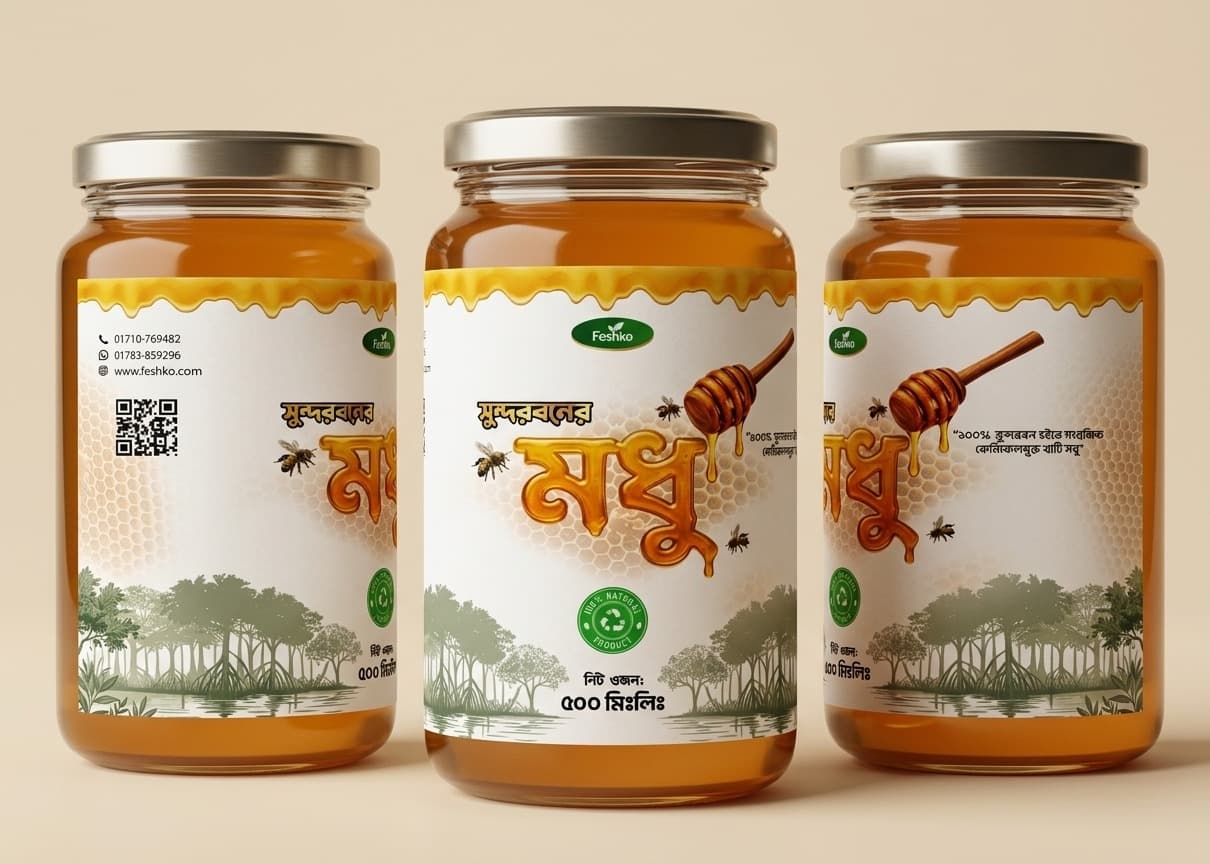
When we think of the Sundarbans—the world’s largest mangrove forest—images of the iconic Royal Bengal Tiger, winding waterways, and dense greenery immediately come to mind. However, hidden deep within this wilderness lies another extraordinary treasure: pure, wild Sundarban honey. Known locally as Mou Modhu, this natural sweetener is celebrated across the region for its distinct taste, medicinal values, and rich harvesting heritage.
What Makes Sundarban Honey Unique?
Unlike commercially farmed honey, which relies on honeybees kept in artificial boxes near specific crop fields, Sundarban honey is completely wild. Honeybees (Apis dorsata) build massive hives high up in the dense mangrove canopy, feeding on a wide variety of wild flora.
The color, flavor, and texture of the honey depend heavily on the flowers in bloom:
- Khalsi Flower Honey: Harvested at the very beginning of the season, this is considered the highest quality honey. It is light amber, delightfully aromatic, and has a smooth, gentle sweetness.
- Gewa and Passur Honey: Collected as the season progresses, this honey turns darker, with a slightly stronger, bold flavor profile.
- Bain and Gorjan Honey: Gathered near the end of the harvesting window, offering a rich, deep taste.
Key Health Benefits & Characteristics
- 100% Raw and Unprocessed: It contains natural pollen, wild bee propolis, and living enzymes that are often stripped away during commercial pasteurization.
- Rich in Antioxidants & Nutrients: Packed with essential vitamins, minerals, and natural antibacterial compounds, it helps strengthen the immune system, soothe throat irritations, and promote healthy digestion.
- Texture & Appearance: Pure wild mangrove honey has a slightly runny consistency due to high natural moisture levels in the forest environment. Over time, genuine raw honey may form a fine layer of natural sediment at the bottom of the jar—a clear indicator of its unprocessed purity.
The Heroic Journey of the Mauyals
Behind every jar of Sundarban honey lies a dangerous and courageous human story. The traditional honey collectors, known as Mauyals, embark on month-long expeditions into the deep forest during the harvesting season (typically from April to June).
Navigating through muddy terrain and narrow creeks, they face constant threats from wild animals, including Royal Bengal Tigers, saltwater crocodiles, and venomous snakes. Armed with smoke to gently disperse the bees, they harvest only a portion of the hive, ensuring the bee colonies can survive and rebuild for the next season.
Final Thoughts
Sundarban honey is far more than a delicious natural sweetener—it is a taste of untouched nature, a centuries-old tradition, and a symbol of human resilience. Choosing authentic Sundarban honey means enjoying a premium superfood while honoring the incredible bravery of the forest’s local communities.